

Olive oil is one of the most studied fats in inflammation research, and the trials point toward lower markers. A pooled analysis of 30 randomized trials covered 3,106 people. Those given olive oil saw C-reactive protein (CRP, a standard blood marker of inflammation) fall by 0.64 mg/L more than people on control diets. Interleukin-6 came down as well. Its fat is mostly oleic acid, and a tablespoon carries about 1.3 g of omega-6, a fraction of what corn or soybean oil supplies. The compounds behind most of the research are its polyphenols, which refined olive oil loses. The evidence covers blood markers, and no regulator has approved an anti-inflammatory claim for any food.
- Choose extra virgin, which keeps the polyphenols that refining strips out.
- Look for a published polyphenol number, ideally above 250 mg/kg.
- Use it in place of other fats rather than on top of them.
- Keep part of your daily amount raw or gently cooked.

What Is in a Tablespoon of Olive Oil
Olive oil is about 73 percent monounsaturated fat by weight, and almost all of that is one fatty acid, oleic acid. USDA's FoodData Central lists 71 g of oleic acid per 100 g of olive oil. Saturated fat makes up about 14 percent. Polyunsaturated fat, the family that includes omega-6 and omega-3, makes up about 10 percent.
That last figure is where the inflammation question usually starts. The main omega-6 fat in cooking oils is linoleic acid. A 13.5 g tablespoon of olive oil carries about 1.3 g of it. The same spoon of soybean oil carries 6.9 g, corn oil 7.2 g, and the linoleic types of sunflower and safflower oil 8.9 and 10.1 g. Canola sits closer to olive oil at 2.6 g.
Olive oil also carries things the chart cannot show. Extra virgin oil is pressed from fruit and never refined. It keeps a family of plant compounds called polyphenols, along with about 14 mg of vitamin E per 100 g. Those compounds are what most of the inflammation research on olive oil is about. Our explainer on why olive oil is not a seed oil covers how the oil is made and how it differs from oils pressed or extracted from seeds.
What the Trials Found When People Ate Olive Oil
The broadest look at this question is a 2015 systematic review from the University of Vienna, published in Nutrients. Lukas Schwingshackl and colleagues pooled 30 randomized controlled trials with 3,106 participants. Across 15 trials, olive oil lowered CRP by 0.64 mg/L more than the comparison diets. Across seven trials, interleukin-6 came down by 0.29 more. Flow-mediated dilation, a measure of how well arteries widen, rose by 0.76 percentage points across eight trials.
The authors asked for a conservative reading. Some trials gave olive oil as a supplement. Others built it into a whole diet, and the control diets varied. The direction was consistent all the same, and it pointed toward lower markers rather than higher ones. The abstract is on PubMed.
Smaller trials fill in why the grade of oil matters. Each row below has a breakdown in our research library.
| Study | What people received | What changed | Type of evidence |
|---|---|---|---|
| Schwingshackl 2015, Nutrients | Olive oil in 30 trials, 3,106 participants | CRP down 0.64 mg/L and IL-6 down 0.29 against controls | Meta-analysis of randomized trials with mixed designs |
| Covas 2006, Ann Intern Med | 25 mL a day of olive oils at 2.7, 164 and 366 mg/kg polyphenols, 200 men | Oxidized LDL fell as polyphenol content rose | Randomized crossover measuring oxidative damage |
| Moratilla-Rivera 2025, Clinical Nutrition | 15 mg a day of hydroxytyrosol for 16 weeks, 49 adults with prediabetes | IL-6 fell 2.31 pg/mL against 0.69 on placebo | Randomized trial of a supplement, which is a different thing from oil |
| Harms 2020, Br J Nutr | No intervention; blood polyphenols measured in 315 adults | Each standard deviation higher came with 29 percent lower odds of elevated hsCRP | Cross-sectional association across all dietary polyphenols |
| Ghosh 2020, Gut | A Mediterranean diet for 12 months, 612 adults aged 65 to 79 | Closer adherence tracked with lower CRP and IL-17 | Whole-diet intervention, so the oil cannot be separated out |
The Covas trial is the one that isolates the oil. Same men, same 25 mL, three oils that differed only in polyphenol content, and the response followed the number. That is the reason grade matters more than the word olive on the label.
The Part That Is Not Fat

Two polyphenols carry most of the inflammation research. Oleocanthal is the compound that makes a fresh extra virgin oil catch at the back of your throat. In 2005, researchers at the Monell Chemical Senses Center reported in Nature that it blocked the COX-1 and COX-2 enzymes in lab assays, the same pathway ibuprofen acts on. Our breakdown of that paper covers what was and was not tested. It was enzyme and taste work. The authors estimated that 50 g a day of a high-oleocanthal oil supplies roughly 10 percent of an adult ibuprofen dose, and offered that as a hypothesis about long, low exposure. Olive oil is food and does not replace medication. Our piece on the peppery bite explains why some oils sting and others do not.
Hydroxytyrosol and its relatives are the second group. They are the compounds named in the one European health claim for olive oil, which covers protection of blood lipids from oxidative damage at 5 mg per 20 g of oil. They are also well absorbed. In a study in eight people, at least 55 to 66 percent of a swallowed dose was taken up. Our hydroxytyrosol explainer covers the compound in depth.
Refining removes these compounds. Refined olive oil is neutralized, bleached and deodorized, which takes out most of the polyphenols along with the bitterness and pepper. Light and pure olive oils are mostly refined oil. The fat profile stays close to extra virgin. So the version of olive oil with the strongest case on inflammation is the one that still tastes of olives.

Where the Seed Oil Worry Comes From
The concern about omega-6 runs through a real pathway. The body can turn linoleic acid into arachidonic acid. Arachidonic acid is the starting material for several signaling molecules involved in inflammation. From there it is a short step to the idea that more omega-6 in the diet means more inflammation.
Researchers have tested that step directly. In 2012, a University of Illinois team published a systematic review in the Journal of the Academy of Nutrition and Dietetics. It gathered 15 randomized trials that raised linoleic acid intake in healthy adults. None found a significant rise in CRP, fibrinogen, cytokines, adhesion molecules or tumor necrosis factor. The authors concluded that the trial evidence does not show added linoleic acid raising inflammatory markers in healthy people. The review is on PubMed. A 2009 American Heart Association science advisory reached a similar place, recommending that omega-6 fats supply at least 5 to 10 percent of daily calories.
The case for olive oil holds up without the case against seed oils. Its research rests on what extra virgin oil brings, measured in trials that fed it to people. If you cook mostly with seed oils, swapping some of that for extra virgin olive oil does two jobs. It lowers your omega-6 and adds polyphenols. Our olive oil vs butter comparison covers the other common swap.

Does Cooking Change the Answer
Polyunsaturated fats react with oxygen faster than monounsaturated fats. Olive oil's high oleic acid content and its polyphenols both help it hold up in the pan. The polyphenols get used up doing that job, so some of the number on the label is lost to heat.
Ordinary sautéing and roasting are fine. Any oil breaks down when held at high heat for a long time or reused for deep frying. Olive oil is no exception. Our smoke point guide lists where each oil starts to smoke. If the polyphenols are the reason you buy the bottle, keep part of your daily amount raw, on salads, vegetables, beans or bread.
How Much the Studies Used
Most olive oil trials settled on 20 to 25 g a day, about one and a half to two tablespoons, eaten with meals. The European claim is written around 20 g a day of an oil delivering 5 mg of hydroxytyrosol and its derivatives, which an oil near 250 mg/kg reaches. Our guide to how much olive oil per day lays out the full range the research covered.
Two tablespoons come to about 240 calories. Olive oil works best in place of other fats, so plan around those calories instead of adding them on top of what you already eat.
What the Research Does Not Show
No regulator in the EU or the US has approved an anti-inflammatory claim for olive oil. The one approved European claim covers protection of blood lipids from oxidative damage. The inflammation research sits at a lower level of evidence than that claim.
The trials measured lab values such as CRP, IL-6 and oxidized LDL. A lower marker in a trial is not the same as feeling different, and these studies did not ask whether anyone's joints hurt less. The pooled result also mixes trials with very different designs, as its authors pointed out.
Arthritis, inflammatory bowel disease and autoimmune conditions are managed by clinicians. People living with them should talk to their own doctor before changing their diet, especially anyone already taking blood thinners or anti-inflammatory drugs.
Where Olivea Fits

We make olive oil for the polyphenol number, and we publish it. Ultra High Phenolic Extra Virgin Olive Oil ($45) is an early harvest Olympia-variety oil from Messinia, Greece, testing at 1,046 mg/kg total polyphenols by NMR for the 2025 to 2026 harvest. It is USDA Organic and took Gold at the Olympia International Olive Oil Awards in 2026. High Phenolic Extra Virgin Olive Oil ($35) is the Koroneiki everyday bottle at 587 mg/kg, built for cooking.
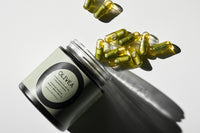
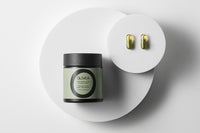
For a measured hydroxytyrosol dose without the calories, the hydroxytyrosol capsule ($40, or $32 a month on subscription) carries 20 mg of hydroxytyrosol plus polyphenols from high phenolic oil in the outer capsule. If you are comparing bottles, our guide to choosing an olive oil for inflammation covers what to look for on a label, and the healthiest olive oils roundup ranks specific brands.
If You Skip Everything Else
Extra virgin olive oil is low in omega-6, mostly oleic acid, and the trials that fed it to people point toward lower inflammation markers. The polyphenols do much of that work. Choose a fresh extra virgin with a published number, use about two tablespoons a day in place of other fats, and keep some of it raw. Treat the evidence as markers in trials, and leave any inflammatory condition to your doctor.
Frequently Asked Questions
Is olive oil inflammatory?
In trials, olive oil has tended to lower inflammation markers. A 2015 meta-analysis of 30 randomized trials found olive oil lowered CRP by 0.64 mg/L and IL-6 by 0.29 compared with control diets. Extra virgin oil is mostly oleic acid, carries little omega-6, and keeps the polyphenols that most of the research focuses on.
Is olive oil high in omega-6?
No. A tablespoon of olive oil carries about 1.3 g of linoleic acid, the main omega-6 fat, according to USDA data. The same tablespoon of soybean oil carries 6.9 g and corn oil 7.2 g. About 71 percent of olive oil is oleic acid, a monounsaturated fat that is not part of the omega-6 family.
Is olive oil better than seed oils for inflammation?
Trials that fed people olive oil found lower inflammation markers, and extra virgin oil adds polyphenols that seed oils do not carry. A 2012 review of 15 trials also found that adding linoleic acid did not raise inflammation markers in healthy adults. Olive oil's case rests on what it contains, rather than on seed oils being harmful.
Does heating olive oil make it inflammatory?
Normal cooking does not turn olive oil into a different fat. Its oleic acid and polyphenols make it more stable under heat than oils high in polyunsaturated fat, though some polyphenols are used up in the process. Any oil degrades with long high-heat frying or reuse, so keep part of your daily olive oil raw.
Is light or refined olive oil anti-inflammatory?
Refined, light and pure olive oils keep a similar fat profile, but refining strips most of the polyphenols. The trial that varied only polyphenol content, EUROLIVE, found oxidized LDL fell as the polyphenol number rose. For the compounds most of the research is about, extra virgin with a published polyphenol number is the grade to buy.
Can olive oil lower CRP?
In pooled randomized trials, olive oil lowered CRP by an average of 0.64 mg/L more than control diets. The trials varied in design, so the authors asked for a cautious reading. CRP is a blood marker rather than a symptom, and no regulator has approved a claim that olive oil lowers it.
Disclaimer
This article is for informational purposes only and is not intended to diagnose, treat, cure, or prevent any disease. These statements have not been evaluated by the Food and Drug Administration. Consult your healthcare provider before starting any supplement regimen, especially if you are pregnant, nursing, taking medication, or have a medical condition.
