

Lemon Olive Oil Cake (Moist & Simple)

Lemon Olive Oil Cake (Moist & Simple)

A moist, tender lemon olive oil cake with bright citrus and a soft fruity richness from good extra virgin olive oil. It comes together in one bowl with no mixer, and the olive oil keeps the crumb plush for days.

Jump to Recipe
Prep 15 min
Cook 45 min
Total 60 min
Easy

Why We Love This Recipe

We love this cake because it earns its richness honestly. Instead of a stick of butter, the tenderness comes from extra virgin olive oil, a plant-based fat rich in monounsaturated fats and the cornerstone of the Mediterranean way of eating. Fresh lemon juice and zest bring vitamin C and bright aroma with almost no added fat, and eggs and ricotta add protein that keeps a slice satisfying.

The oil you choose is what carries both the flavor and the good-for-you story here. Our High Phenolic Extra Virgin Olive Oil is USDA Certified Organic, single-origin from Messinia, Greece, early-harvest, and cold-pressed within hours of picking, with its polyphenol target set by Harvard-trained cardiologists and its load verified by qNMR at the University of Athens. It is a high-phenolic oil labeled at 500+ mg/kg polyphenols, and hydroxytyrosol is the most studied of those polyphenols. That same gentle, fruity character is what gives the crumb its soft richness against the lemon. If you are curious about the compound itself, here is how hydroxytyrosol works.

Polyphenols are highest in a fresh, high-phenolic bottle and fade with time, light, and heat, so baking with a fresh bottle and keeping an open one raw for drizzling and dressings is how the most of them reach the plate. As a simple dessert built on olive oil, citrus, and a little dairy, this cake fits comfortably into a Mediterranean-diet pattern.

View Nutrition Facts

Recipe Success Tips

Rub the zest into the sugar first.

Massage the lemon zest into the sugar with your fingertips until the sugar looks damp and smells intensely of lemon. This crushes the zest and releases its oils into the sugar, so the lemon flavor runs through the whole cake instead of sitting in flecks.

Use a fruity, gentle olive oil.

A smooth, balanced extra virgin olive oil like our High Phenolic Extra Virgin Olive Oil adds soft fruity richness and keeps the crumb moist without turning bitter against the sweetness. A very sharp, aggressively peppery oil can fight the lemon in a delicate cake, so save the boldest oils for savory finishing.

Do not overmix the batter.

Whisk the wet and dry together just until no dry streaks remain. Overworking the flour builds gluten and gives you a tough, gummy crumb instead of a tender one.

Weigh the flour if you can.

Scoop-and-pack measuring can add 20 percent more flour and dry the cake out. Spoon the flour into the cup and level it, or better, use a scale at 125 grams per cup.

Let it cool before you glaze.

A warm cake melts the glaze into a thin, runny puddle. Cool it fully so the lemon glaze sets into a crisp, opaque layer that stays put.

Ingredients

10
servings
  • 3/4 cup High Phenolic Extra Virgin Olive Oil
  • 2 cups all-purpose flour
  • 1 1/4 cups granulated sugar
  • 3 large eggs
  • 1/2 cup whole-milk ricotta
  • 1/3 cup whole milk
  • 2 tablespoons lemon zest, finely grated
  • 1/4 cup fresh lemon juice
  • 1 1/2 teaspoons baking powder
  • 1/4 teaspoon baking soda
  • 1/2 teaspoon fine sea salt
  • 1 teaspoon vanilla extract
  • 1 cup powdered sugar, for the glaze

Kitchen Tools You'll Need

9-inch Round Cake Pan
Large Mixing Bowl
Whisk
Microplane or Zester
Wire Cooling Rack
Parchment Paper

How to Cook Lemon Olive Oil Cake (Moist & Simple)

PREP

1
Heat the oven to 350 degrees Fahrenheit. Grease a 9-inch round cake pan, line the bottom with a parchment circle, and grease the parchment.
2
In a large bowl, rub the lemon zest into the granulated sugar with your fingertips until the sugar is damp and fragrant. Whisk in the eggs until pale and slightly thickened, about 1 minute.

MIX

3
Whisk the High Phenolic Extra Virgin Olive Oil into the egg mixture in a slow, steady stream. Its gentle, fruity character folds into the batter here and is what keeps the finished crumb moist and softly rich against the lemon. Whisk in the ricotta, milk, lemon juice, and vanilla until smooth.
4
In a separate bowl, whisk the flour, baking powder, baking soda, and salt. Add the dry ingredients to the wet and whisk just until no dry streaks remain, stopping the moment the batter comes together.

BAKE

5
Pour the batter into the prepared pan and smooth the top. Bake for 42 to 48 minutes, until the top is golden, springs back to a light touch, and a skewer inserted in the center comes out clean.
6
Cool in the pan on a wire rack for 15 minutes, then run a knife around the edge, invert onto the rack, peel off the parchment, and cool completely.

FINISH

7
Whisk the powdered sugar with 2 to 3 tablespoons of lemon juice until pourable but not watery. Spoon it over the fully cooled cake and let it set for 10 minutes before slicing.

Recipe Notes

Serve slices plain with coffee or tea, or dress them up with fresh berries and a spoonful of lightly sweetened whipped cream or mascarpone. For a citrus-forward brunch spread, pair it with a bright starter like this classic olive oil cake served alongside for people who like theirs without the lemon glaze.
Swap the lemon for the same amount of orange or a mix of lemon and lime for a different citrus profile. Fold 2 tablespoons of poppy seeds into the batter for a lemon poppy seed version, or add 1 teaspoon of chopped fresh rosemary for a subtle herbal note that plays well with olive oil.
For a tender cake like this one, reach for the smooth, balanced High Phenolic Extra Virgin Olive Oil, which adds fruity richness and moisture without any harsh bitterness. Save the bolder, peppery Ultra High Phenolic for raw finishing on savory dishes, where its punch is the point. In a sweet bake, gentle is exactly what you want.
The olive oil keeps this cake moist far longer than a butter cake. Store it covered at room temperature for up to 5 days, or wrap well and freeze for up to 3 months. Glaze after thawing for the freshest look. Keep your olive oil in a cool, dark cupboard with the cap tight so it stays fresh and fruity for the next bake.

Nutrition Facts per Serving

Nutrition Facts
Serving size 1 slice (1/10 of cake)
Calories 345
% Daily Value*
Total Fat 17g22%
Saturated Fat 3g15%
Trans Fat 0g
Unsaturated Fat 14g
Monounsaturated Fat 11g
Polyunsaturated Fat 2g
Cholesterol 58mg19%
Sodium 230mg10%
Total Carbohydrate 44g16%
Dietary Fiber 0.7g3%
Total Sugars 27g
Includes 27g Added Sugars 54%
Protein 5g10%
Vitamin A 40mcg4%
Vitamin C 4mg4%
Vitamin D 0.4mcg2%
Calcium 75mg6%
Iron 1.3mg7%
Potassium 70mg1%
* Percent Daily Values are based on a 2,000 calorie diet.

The Best No-Cook Way to Get Olive Oil Benefits

This cake gives you olive oil in a bright, sweet bake. For an easy way to get olive polyphenols every day without cooking, the Olivea Hydroxytyrosol Supplement delivers a consistent daily dose in a single flavorless capsule.
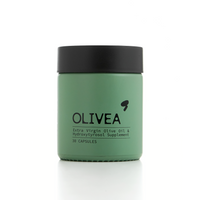
Olivea: Suplemento de hidroxitirosol
$40.00
Add to Cart

Frequently Asked Questions

A smooth, fruity extra virgin olive oil works best in a delicate cake. Our High Phenolic Extra Virgin Olive Oil adds soft, fruity richness and keeps the crumb moist without turning bitter against the lemon. Very sharp, aggressively peppery oils can overpower a sweet bake.
You taste it as a gentle fruity richness rather than a savory olive flavor. Paired with plenty of lemon, the oil reads as depth and moisture, the reason olive oil cakes stay so tender and fragrant.
Olive oil stays liquid at room temperature, so the cake keeps a soft, moist crumb for days instead of drying out like many butter cakes. It also brings a fruity flavor and monounsaturated fats that fit a Mediterranean-style diet.
The olive oil does most of the work, but avoid overbaking and pull the cake as soon as a skewer comes out clean. Store it covered at room temperature and the crumb stays plush for up to 5 days.
Yes. Substitute a good cup-for-cup gluten-free all-purpose blend that contains xanthan gum. The texture is slightly more delicate, so cool it fully in the pan before turning it out.
Yes. Replace the ricotta with an equal amount of plain whole-milk Greek yogurt or sour cream for a similar tangy moisture. Both keep the crumb tender and add a little protein.
A 9-inch round cake pan is ideal for an even, tender layer. You can also use a standard loaf pan, though it will need an extra 10 to 15 minutes and you should tent it with foil if the top browns too fast.
Keep it covered at room temperature for up to 5 days, or wrap well and freeze for up to 3 months. Add the glaze after thawing for the freshest finish.
It is still a dessert with sugar, but building it on extra virgin olive oil and lemon instead of butter fits a Mediterranean pattern of eating and swaps in monounsaturated fats. Enjoyed as an occasional treat, it is a genuinely satisfying choice.
Olive oil cakes have deep roots in the Mediterranean, especially Italy and Spain, where olive oil was the everyday cooking fat long before butter. The lemon version is a classic Italian riff that pairs the oil's fruitiness with bright citrus.

Carrito de compras

No hay más productos disponibles para comprar