
This site has limited support for your browser. We recommend switching to Edge, Chrome, Safari, or Firefox.
UK customers — find us on Healf →
Baked Halibut with Lemon and Dill

Baked Halibut with Lemon and Dill

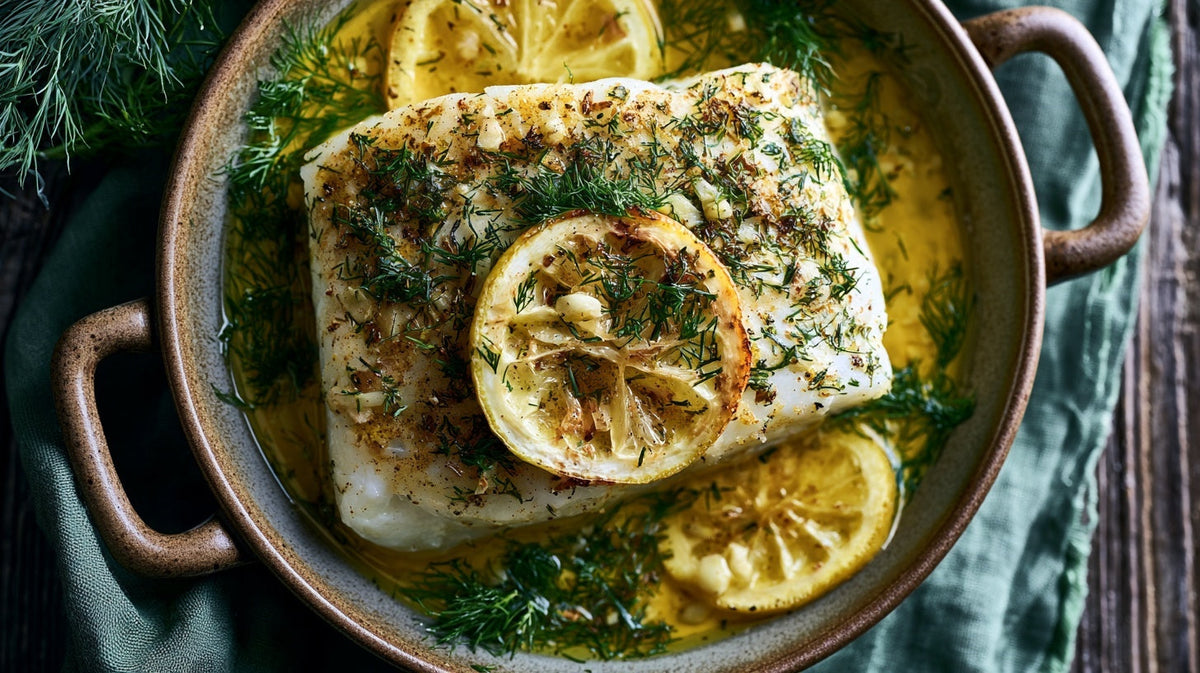
Tender, flaky baked halibut with lemon, garlic, and fresh dill, roasted in High Phenolic Extra Virgin Olive Oil for a grassy, peppery finish. A bright Mediterranean dinner ready in under 30 minutes.

Jump to Recipe
Prep 10 min
Cook 15 min
Total 25 min
Easy

Why We Love This Recipe

We love this halibut because it is genuinely good for you. Halibut is a lean, mild white fish that is high in protein and naturally low in carbohydrates, and it carries minerals like selenium, magnesium, and potassium along with B vitamins. Baking it gently with lemon, garlic, and fresh dill keeps the plate clean and whole, with nothing more than a few fresh ingredients doing the work.

The olive oil is where the dish earns its Mediterranean character. We bake the halibut in High Phenolic Extra Virgin Olive Oil, a smooth, balanced oil suited to gentle oven heat, then finish the plate with a raw drizzle of Ultra High Phenolic Extra Virgin Olive Oil. Both are rich in polyphenols, specifically hydroxytyrosol, the most studied olive polyphenol, and that peppery catch you taste in a fresh drizzle is the polyphenols themselves. Olivea is developed with Harvard-trained cardiologists, USDA Certified Organic, single-origin from Messinia, Greece, early harvest, and cold-pressed within hours, with its polyphenol load verified by qNMR at the University of Athens. Because polyphenols are highest in fresh oil and fade with time, light, and heat, a raw finishing drizzle from a fresh bottle is how the most of them reach the plate. For the science, see the evidence behind Olivea, and for background you can read the research on olive-oil polyphenols.

With lean fish, fresh herbs, bright lemon, and good olive oil, this is the kind of plate that sits comfortably in the Mediterranean-diet pattern: simple, fresh, and rich in monounsaturated fats.

View Nutrition Facts

Recipe Success Tips

Pat the halibut completely dry first.

A dry surface lets the oil and seasoning cling instead of beading off, and it helps the top brown lightly in the oven. Press both sides with paper towels and season just before baking so the salt does not draw out moisture.

Do not overbake delicate halibut.

Halibut is lean and turns dry fast once it passes doneness. Pull it when it just flakes with gentle pressure and reads 130 to 135F at the thickest point; carryover heat finishes it on the plate.

Bring the fish close to room temperature.

Letting the fillets sit out for about 15 minutes before baking helps them cook evenly, so the edges do not overcook while the center catches up.

Use fresh dill, and add most of it late.

Dill loses its bright, grassy aroma when it cooks too long. Bake with a little, then scatter the rest fresh over the finished fish so the herb tastes alive.

Cook with High Phenolic, finish with Ultra High Phenolic.

The High Phenolic Extra Virgin Olive Oil is smooth and balanced, right for gentle oven heat on a mild fish. A raw drizzle of the bold, peppery Ultra High Phenolic at the table adds a grassy, throat-catching lift that cuts the richness without overwhelming the halibut.

Reach for a fresh, peppery bottle.

A fresh high-phenolic oil tastes greener and more peppery, and that pepper is the polyphenols you can taste. Store your oil away from heat and light and use it while it is fresh so its flavor reaches the plate at its best.

Ingredients

4
servings
  • 3 tablespoons High Phenolic Extra Virgin Olive Oil
  • 4 fillets halibut fillets, skinless (about 6 oz each)
  • 3 garlic cloves, minced
  • 1 lemon, half juiced and half sliced into thin rounds
  • 3 tablespoons fresh dill, chopped
  • 3/4 teaspoon sea salt
  • 1/2 teaspoon freshly ground black pepper
  • 2 tablespoons Ultra High Phenolic Extra Virgin Olive Oil, for finishing

Kitchen Tools You'll Need

Baking Dish or Sheet Pan
Chef's Knife
Cutting Board
Small Bowl
Instant-Read Thermometer

How to Cook Baked Halibut with Lemon and Dill

PREP

1
Heat the oven to 400F and lightly oil a baking dish or rimmed sheet pan. Pat the halibut fillets completely dry and season both sides with the sea salt and black pepper.
2
In a small bowl, stir together the minced garlic, the juice from half the lemon, 2 tablespoons of the High Phenolic Extra Virgin Olive Oil, and 1 tablespoon of the chopped dill.

BAKE

3
Arrange the fillets in the dish and spoon the garlic, lemon, and dill mixture over the top, rubbing it across each fillet. Drizzle with the remaining 1 tablespoon of High Phenolic Extra Virgin Olive Oil, which stays smooth and gentle under oven heat and keeps the lean fish moist as it bakes. Lay the lemon slices over and around the fish.
4
Bake for 12 to 15 minutes, until the halibut just flakes with gentle pressure and reads 130 to 135F at the thickest part. Thinner fillets will be done sooner, so start checking at 10 minutes.

FINISH

5
Let the fish rest for 2 minutes. Scatter the remaining fresh dill over the top, then finish each fillet with a drizzle of Ultra High Phenolic Extra Virgin Olive Oil for a bold, grassy, peppery lift that brightens the mild halibut. Serve with the roasted lemon slices and any pan juices spooned over.

Recipe Notes

This halibut loves a bright, simple side. Spoon it over Greek lemon rice or serve it alongside roasted asparagus with lemon to keep the whole plate fresh and Mediterranean. A spoonful of lemon dill sauce on the side works beautifully here too, since the herb and citrus echo the fish.
Halibut not at the market this week? This same lemon and dill treatment is excellent on other firm, delicate white fish. Try it with the method from our baked orange roughy, or pan-sear the fillets instead like our lemon butter cod. For an even simpler Mediterranean route, our easy lemon fish recipe uses the same bright, oil-forward approach.
Bake the fish in the smooth, balanced High Phenolic Extra Virgin Olive Oil, which is suited to gentle oven heat and lets the mild halibut stay in the foreground. To finish, drizzle the bold, peppery Ultra High Phenolic at the table for a fresh grassy lift. Prefer a gentler result? Skip the finishing drizzle and let the baked oil carry the dish.
Store leftover halibut in an airtight container in the refrigerator for up to 2 days. Reheat gently, covered, in a 275F oven just until warmed through so the lean fish does not dry out, and add a fresh drizzle of olive oil and dill before serving.

Nutrition Facts per Serving

Nutrition Facts
Serving size 1 fillet with oil and herbs
Calories 320
% Daily Value*
Total Fat 20g26%
Saturated Fat 3g15%
Trans Fat 0g
Unsaturated Fat 16.5g
Monounsaturated Fat 14g
Polyunsaturated Fat 2.5g
Cholesterol 80mg27%
Sodium 470mg20%
Total Carbohydrate 2g1%
Dietary Fiber 0.5g2%
Total Sugars 1g
Includes 0g Added Sugars 0%
Protein 31g62%
Vitamin D 4.7mcg24%
Calcium 30mg2%
Iron 1.3mg7%
Potassium 760mg16%
Magnesium 110mg26%
Selenium 60mcg109%
Vitamin C 6mg7%
* Percent Daily Values are based on a 2,000 calorie diet.

The Best No-Cook Way to Get Olive Oil Benefits

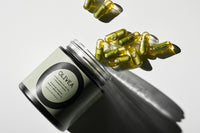
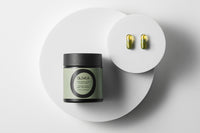
Cooking and finishing with a fresh high-phenolic olive oil is one of the easiest ways to bring olive polyphenols to the table. For an easy daily polyphenol habit without cooking, the Olivea Hydroxytyrosol Supplement delivers a consistent dose of hydroxytyrosol in a single capsule.
Olivea Hydroxytyrosol Supplement
$40.00
Add to Cart

Frequently Asked Questions

At 400F, halibut fillets about 1 inch thick take roughly 12 to 15 minutes. They are done when the fish just flakes with gentle pressure and reads 130 to 135F at the thickest point. Start checking thinner fillets at 10 minutes so they do not overcook.
Pull halibut at 130 to 135F at the thickest part and let it rest a couple of minutes, where carryover heat finishes it to a moist, just-opaque center. Cooking it well past 140F tends to dry out this lean fish.
It fits naturally into a Mediterranean-style way of eating. Halibut is lean and high in protein, the lemon and dill add brightness without extra fat or sugar, and the dish is built on extra virgin olive oil, which is rich in monounsaturated fats and polyphenols.
Use a smooth, balanced extra virgin olive oil for baking so it supports the mild fish rather than overpowering it. Olivea High Phenolic Extra Virgin Olive Oil is suited to gentle oven heat, and a finishing drizzle of the bolder Ultra High Phenolic adds a fresh, peppery lift at the table.
Yes. Thaw it fully in the refrigerator overnight, then pat it very dry before seasoning so the surface is not watery. Frozen-at-sea halibut is often excellent quality and works well here.
Any firm, mild white fish takes well to lemon and dill. Cod, orange roughy, sea bass, or thick haddock fillets are good swaps, though baking times will vary with thickness.
Yes. Sear the seasoned fillets in olive oil in a nonstick or stainless skillet over medium-high heat for about 3 to 4 minutes per side, then add the garlic, lemon, and dill at the end and spoon the pan juices over the fish.
Bright, simple sides work best. Lemon rice, roasted asparagus, a green salad, or crusty bread all round out the plate without competing with the delicate fish.
Yes. As written, baked lemon dill halibut uses only fish, olive oil, lemon, garlic, dill, salt, and pepper, so it is naturally gluten-free, dairy-free, and low in carbohydrates.
A raw drizzle adds a fresh, grassy, peppery flavor that a cooked oil cannot, and that pepper is the polyphenols you can taste. Polyphenols are highest in fresh oil, so finishing with a fresh high-phenolic bottle is how the most of them reach the plate.

Cart

No more products available for purchase