
Lemon Orzo (Easy One-Pot Side Dish)

Lemon Orzo (Easy One-Pot Side Dish)

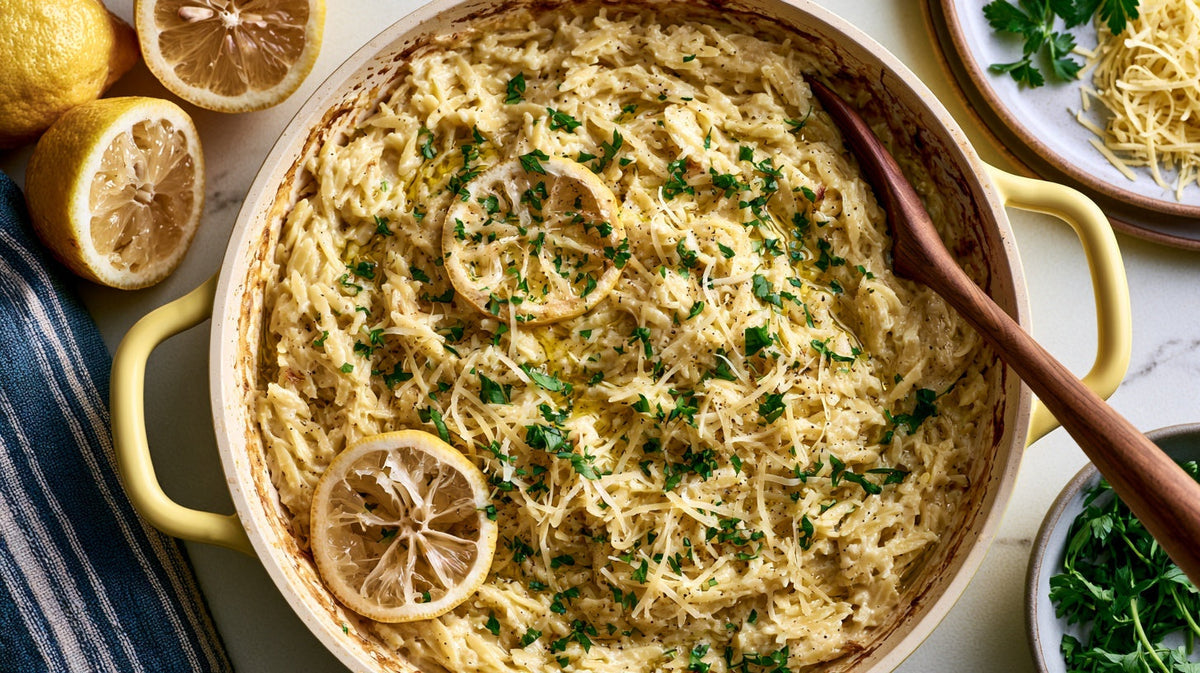
This creamy lemon orzo is a bright, 25-minute Mediterranean side dish toasted in olive oil and finished with fresh lemon, herbs, and Parmesan. A peppery drizzle of extra virgin olive oil at the table gives it a fresh, restaurant-quality lift.

Jump to Recipe
Prep 10 min
Cook 15 min
Total 25 min
Easy

Why We Love This Recipe

We love this lemon orzo because it is genuinely good for you. It leans on whole, fresh ingredients: real lemon juice and zest for vitamin C, garlic and fresh herbs, and just enough Parmesan for savory depth, all built on olive oil instead of a heavy cream or butter base. Fresh lemon brightens the dish so it feels light on the plate, and the orzo makes it satisfying without weighing you down.

Olive oil is the cornerstone fat of the Mediterranean diet and is rich in monounsaturated fats. Here it does the flavor work too: our High Phenolic Extra Virgin Olive Oil toasts the orzo into a nutty, fruity base, and a finishing thread of the Ultra carries a fresh, peppery lift on top. That peppery catch at the back of your throat is the hydroxytyrosol and other polyphenols you can actually taste. Hydroxytyrosol is the most studied olive polyphenol, and our oils carry a lab-verified load (the High Phenolic labeled at 500+ mg/kg total polyphenols, the Ultra at 1,000+ mg/kg), verified by qNMR at the University of Athens. Polyphenols are highest in a fresh bottle and fade with time, light, and heat, so finishing raw with a fresh oil is how the most of them reach the plate. If you like the science, this dish is a good excuse to read the bioavailability research.

Our oils are USDA Certified Organic, single-origin from Messinia, Greece, early harvest, cold-pressed within hours, and developed with Harvard-trained cardiologists who set the polyphenol target for each line. It is a simple, plant-forward side that fits an everyday Mediterranean pattern of eating.

View Nutrition Facts

Recipe Success Tips

Toast the orzo until golden.

Do not rush the toasting step. Stir the orzo in the warm High Phenolic Extra Virgin Olive Oil for two to three minutes, until it smells nutty and turns the color of light straw. This one step is what gives lemon orzo its deep, savory backbone instead of a plain boiled-pasta taste.

Use fresh lemon, both juice and zest.

Zest the lemons before you juice them, and add the zest at the end so its oils stay bright. Bottled juice tastes flat and slightly bitter here. Two medium lemons give you enough juice and zest for a side that reads clearly of lemon without turning sour.

Stop cooking while it is still saucy.

Orzo keeps drinking liquid as it sits, so pull it off the heat when it looks a little loose and creamy. It will tighten in the two minutes before you serve. If it stiffens up, loosen it with a splash of warm broth.

Finish raw for the freshest flavor.

Reach for a fresh, peppery high-phenolic oil for the finishing drizzle and add it off the heat. A raw thread of Ultra High Phenolic Extra Virgin Olive Oil at the table gives you a grassy, peppery top note, and finishing with a fresh bottle is how the most of the oil's polyphenols reach the plate.

Salt the broth, not just the pasta.

Since the orzo cooks in the broth and absorbs it, a well-seasoned broth seasons the whole dish evenly. Taste before you add extra salt at the end, especially if you are using salty Parmesan.

Ingredients

6
servings
  • 3 tablespoons High Phenolic Extra Virgin Olive Oil
  • 1 1/2 cups orzo pasta
  • 3 garlic cloves, minced
  • 3 cups low-sodium vegetable or chicken broth
  • 2 teaspoons lemon zest, finely grated
  • 3 tablespoons fresh lemon juice
  • 1/2 cup grated Parmesan cheese
  • 1/4 cup flat-leaf parsley, chopped
  • 3/4 teaspoon kosher salt
  • 1/4 teaspoon black pepper, freshly ground
  • 1 tablespoon Ultra High Phenolic Extra Virgin Olive Oil, for finishing

Kitchen Tools You'll Need

Large Saucepan or Deep Skillet
Microplane or Zester
Citrus Juicer
Wooden Spoon
Fine Grater

How to Cook Lemon Orzo (Easy One-Pot Side Dish)

PREP

1
Mince the garlic. Zest two lemons to get about two teaspoons of zest, then juice them for three tablespoons of juice. Grate the Parmesan and chop the parsley so everything is ready before the orzo starts cooking.

TOAST

2
Warm the High Phenolic Extra Virgin Olive Oil in a large saucepan over medium heat, then add the orzo and stir for two to three minutes until it smells nutty and turns light golden. Toasting the orzo in the fruity High Phenolic oil builds a savory, nutty base that plain boiling never gives you.
3
Add the minced garlic and stir for about thirty seconds, just until fragrant, so it perfumes the oil without browning.

SIMMER

4
Pour in the broth, add the salt and black pepper, and bring to a gentle boil. Reduce the heat to medium-low, cover, and simmer for about twelve minutes, stirring once or twice, until the orzo is al dente and most of the liquid is absorbed but the mixture still looks creamy and loose.
5
Remove from the heat and stir in the Parmesan, lemon juice, and most of the lemon zest. The orzo will thicken as it stands, so keep it a little saucy.

FINISH

6
Stir in the chopped parsley and taste for salt and lemon. Spoon into a serving dish, scatter the reserved lemon zest over the top, and finish with a drizzle of Ultra High Phenolic Extra Virgin Olive Oil for a bold, peppery lift. Serve warm.

Recipe Notes

This bright, lemony orzo is a natural partner for simple proteins and roasted vegetables. Spoon it alongside roasted asparagus with lemon, pile it next to grilled chicken or fish, or serve it as part of a Mediterranean spread. If you want another lemony grain on the table, our Greek lemon rice plays the same role with rice instead of orzo.
Fold in baby spinach or peas at the end for color, or add crumbled feta in place of some of the Parmesan for a tangier, Greek-leaning version. Served cold the next day it becomes a quick pasta salad, much like our lemon pasta salad or the herb-flecked lemon herb couscous salad.
The orzo toasts and simmers, so reach for the High Phenolic Extra Virgin Olive Oil as your cooking oil. It is smooth and balanced with a gentle pepper that holds up to the heat. Save the bolder Ultra High Phenolic for the raw finishing drizzle at the table, where its grassy, peppery character comes through clearly.
Keep leftovers in an airtight container in the refrigerator for up to three days. Store your olive oil away from heat and light, tightly capped, so it stays fresh and peppery. To reheat, warm gently with a splash of broth or water and a fresh squeeze of lemon to loosen and brighten it back up.

Nutrition Facts per Serving

Nutrition Facts
Serving size about 3/4 cup
Calories 290
% Daily Value*
Total Fat 11g14%
Saturated Fat 2.5g13%
Trans Fat 0g
Unsaturated Fat 8g
Monounsaturated Fat 7g
Polyunsaturated Fat 1g
Cholesterol 6mg2%
Sodium 420mg18%
Total Carbohydrate 38g14%
Dietary Fiber 2g7%
Total Sugars 2g
Includes 0g Added Sugars 0%
Protein 9g18%
Vitamin A 30mcg3%
Vitamin C 8mg9%
Vitamin D 0mcg0%
Calcium 110mg8%
Iron 1.5mg8%
Potassium 130mg3%
* Percent Daily Values are based on a 2,000 calorie diet.

The Best No-Cook Way to Get Olive Oil Benefits

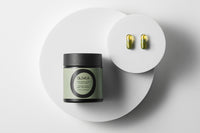
Finishing this orzo with a raw drizzle of fresh, high-phenolic olive oil is one of the easiest ways to get olive polyphenols straight to the plate. For an easy daily habit on the days you are not cooking, the Olivea Hydroxytyrosol Supplement offers a convenient no-cook dose of the same olive polyphenols.
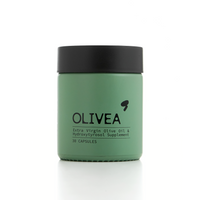
Olivea: Suplemento de hidroxitirosol
$40.00
Add to Cart

Frequently Asked Questions

Lemon orzo is a quick Mediterranean side dish made from orzo, a small rice-shaped pasta, cooked in broth and brightened with fresh lemon juice, zest, herbs, and Parmesan. It is creamy without any cream and comes together in about 25 minutes in one pot.
Orzo is pasta, not rice. It is made from wheat semolina and simply shaped to look like a large grain of rice, which is why it works so well in pilaf-style sides like this lemon orzo.
Cook the orzo just to al dente and pull it off the heat while it still looks a little loose and saucy, since it keeps absorbing liquid as it stands. Toasting the orzo first also helps the grains hold their shape and stay separate.
Yes. It keeps in an airtight container in the refrigerator for up to three days. Reheat gently with a splash of broth or water and a fresh squeeze of lemon, since the orzo tightens and the lemon mellows as it sits.
Made with vegetable broth, this lemon orzo is vegetarian. It does contain Parmesan, so for a strictly vegetarian version use a rennet-free Parmesan-style cheese, and for a vegan version leave out the cheese and add a little extra lemon and olive oil.
It pairs beautifully with grilled or roasted chicken, salmon, shrimp, or lamb, and with roasted vegetables like asparagus, broccolini, or zucchini. A simple green salad rounds it out into a light meal.
Use a fruity, balanced extra virgin olive oil like the Olivea High Phenolic Extra Virgin Olive Oil to toast the orzo, since it holds up nicely to the cooking heat. Then finish the dish off the heat with a raw drizzle of the bolder Ultra High Phenolic for a fresh, peppery top note.
Traditional orzo is made from wheat, so it is not gluten-free. Look for a gluten-free orzo made from rice or corn, or use a small gluten-free pasta shape, and cook it according to its package timing since it may absorb liquid differently.
Toasting the orzo in olive oil until it turns golden develops a nutty, savory depth of flavor and helps the grains stay distinct and al dente. It is a small step that makes the finished dish taste far richer than plain boiled orzo.
Lean on lemon zest rather than adding more juice. Zest carries the fragrant lemon oils and bright aroma without the extra acidity, so stir most of it in at the end and save a little to scatter over the top.

Carrito de compras

No hay más productos disponibles para comprar