

EFSA's 2017 Hydroxytyrosol Safety Opinion: What 'Novel Food Safe' Means
EFSA Journal, 2017
Study Type
Regulatory Opinion
Participants
EFSA NDA Panel review of toxicology + intake data
Duration
Opinion adopted 25 January 2017
Dosage
Up to 5 mg per kg body weight per day deemed safe
Institution
European Food Safety Authority (EFSA)
This 2017 Scientific Opinion from the European Food Safety Authority (EFSA) is the regulatory safety assessment that cleared hydroxytyrosol for use as a standalone novel food ingredient in the European Union. The EFSA Panel on Dietetic Products, Nutrition and Allergies (NDA) reviewed the toxicological and intake data and concluded that hydroxytyrosol is safe under the proposed conditions of use as a novel food ingredient pursuant to Regulation (EC) No 258/97. The Panel set the safe upper bound at 5 mg per kilogram of body weight per day -- a threshold that puts a typical functional supplement dose well within the margin of safety, with a deliberate buffer between the dose where benefit is authorized and the dose where the Panel identified any toxicological signal.
Why This Matters
EFSA's 2011 olive polyphenols opinion authorized a health claim, but it did not address a different regulatory question: is it safe to consume hydroxytyrosol as an isolated ingredient, separated from the olive oil matrix that delivers it in the traditional Mediterranean diet? That distinction matters because health-claim authorization and novel-food authorization run on parallel tracks. The 2011 opinion handled efficacy. The 2017 opinion handled safety as a standalone food ingredient.
Under Regulation (EC) No 258/97, any food or food ingredient not significantly consumed in the EU before 15 May 1997 was classified as a "novel food" and required a pre-market safety assessment. Isolated hydroxytyrosol, sold separately from olive oil, qualified. The Panel had to work through three questions: how is the ingredient produced and characterized, how will consumers be exposed to it at the proposed use levels, and is the toxicological evidence sufficient to conclude that exposure at those levels is safe.
The conclusion -- that it is safe, with a derived margin that comfortably exceeds typical supplement doses -- is the regulatory backbone of every isolated-hydroxytyrosol product legally sold in the EU. Olivea's capsule operates within this framework.
How It Was Conducted
The Panel evaluated the applicant's dossier covering compositional characterization, production process, intake assessment, and a toxicological package. The toxicological data submitted included acute oral toxicity, a 90-day subchronic repeat-dose study in rats, a battery of genotoxicity assays (bacterial reverse mutation, in vitro micronucleus, in vivo micronucleus), and metabolism and bioavailability data drawn from both the applicant's studies and the broader published literature on olive polyphenol pharmacokinetics.
The intake assessment modeled consumer exposure if hydroxytyrosol were added to the proposed food categories at the proposed concentrations, using the EFSA Comprehensive European Food Consumption Database. Mean and high-percentile intakes were estimated across population subgroups, and total combined exposure -- including background dietary hydroxytyrosol from olive oil consumption -- was compared against the no-observed-adverse-effect level (NOAEL) derived from the subchronic toxicity data.
The opinion was adopted on 25 January 2017 and published as EFSA Journal 2017;15(3):4728. It is the document the European Commission relied on when authorizing isolated hydroxytyrosol as a novel food under Commission Implementing Regulation (EU) 2017/2470.
What They Concluded
| Assessment Area | EFSA Verdict | Basis |
|---|---|---|
| Compositional identity | Sufficiently characterized | Production process and specifications adequately defined |
| Acute and subchronic toxicity | No adverse effects observed at tested doses | 90-day rat study used to derive NOAEL |
| Genotoxicity | No concern | Negative across bacterial and mammalian assays |
| Exposure at proposed use levels | Within safety margin | Modeled intake well below the safe upper bound |
| Overall safety under proposed conditions of use | Safe | Cumulative evidence supports authorization as a novel food |
Green indicates a finding that did not raise a safety concern. The Panel's overall verdict was that hydroxytyrosol is safe under the proposed conditions of use as a novel food ingredient.
The Panel concluded that intakes of up to 5 mg per kilogram of body weight per day did not raise a safety concern. For a 70-kilogram adult, that translates to a safety reference of 350 mg per day -- meaningfully higher than typical functional doses used in commercial products or in published intervention trials.
One scope note is worth surfacing explicitly so the safety conclusion is read accurately. The applicant's submission proposed hydroxytyrosol as an ingredient in food categories targeted at the general adult population, so EFSA's safety conclusion is scoped to that adult population. The Panel did not evaluate use in infants, children, pregnant women, or lactating women because those subgroups were not part of the proposed conditions of use -- a procedural scope limitation in the submission, not a finding of concern in those populations. EFSA's standing practice is to assess only what an applicant submits; any extension to additional subgroups requires its own separate scientific assessment, which is the case for essentially every food ingredient evaluated under this framework.
Reading the Conclusion
The structure of the verdict is worth understanding. EFSA does not declare an ingredient "safe" in the abstract. The opinion is always conditional on a set of proposed uses, a defined production process, and a specific compositional profile. What the Panel said is that at the levels and in the food categories the applicant proposed, the combined dietary exposure to hydroxytyrosol -- including background intake from olive oil already in the food supply -- stayed well below the threshold at which any adverse effect was observed in the toxicology package.
The 5 mg per kilogram per day figure is the operational anchor. It comes from the subchronic NOAEL after application of standard safety factors used in food safety assessment (typically a 100-fold factor accounting for interspecies extrapolation and human variability). A 70 kg adult could consume 350 mg per day and remain within the Panel's safety conclusion; a 90 kg adult, 450 mg. Functional doses studied in intervention trials and used in commercial supplements are generally in the 5 to 50 mg range, which sits one to two orders of magnitude below this threshold.
The other practical takeaway is what the opinion confirms about isolated hydroxytyrosol versus dietary hydroxytyrosol. Olive oil delivers hydroxytyrosol primarily in bound forms -- as part of the oleuropein complex and other phenolic conjugates -- that release the free compound during digestion. Synthetic or extracted hydroxytyrosol delivered as a novel food ingredient is the same molecule, and the bioavailability and safety profile assessed by the Panel were consistent with what the published literature had previously documented for hydroxytyrosol absorbed from olive oil. The 2017 opinion treats the compound, not the matrix.
What This Safety Opinion Means in Practice
The reader translation of EFSA's verdict is straightforward. For an adult consuming hydroxytyrosol -- whether from olive oil in the diet or from a supplement formulated within the conditions of use the Panel evaluated -- the doses associated with documented health benefits sit far below the threshold at which the Panel identified any toxicological signal. The structure of EFSA food safety assessment builds in a deliberate margin: the no-observed-adverse-effect level from the animal toxicology data is reduced by a standard 100-fold safety factor before becoming the human reference, and the reference itself is set well above the range that intervention trials have studied for benefit.
In practical numbers for a 70 kg adult, the regulatory architecture creates two stacked safety margins:
| Reference Point | Daily HT Dose (70 kg adult) | Source |
|---|---|---|
| EFSA-authorized claim threshold | 5 mg/day | 2011 health claim opinion (dose where benefit is authorized) |
| Typical supplement and trial range | 5-50 mg/day | Published intervention trials and commercial supplements |
| EFSA-derived safety reference | 350 mg/day | 2017 novel food opinion (NOAEL with 100-fold safety factor) |
The benefit-to-supplement-range margin is roughly 7-fold; the supplement-range-to-safety margin is another 7-fold. This stacked architecture is what makes hydroxytyrosol supplementation a deliberately conservative category from a regulatory standpoint.
EFSA periodically reopens novel food assessments as new evidence accumulates. The 2017 opinion reflects the toxicological and intake data submitted for review at that time, and the safety conclusion has not changed since. The broader hydroxytyrosol research base -- including post-2017 intervention trials, pharmacokinetic studies, and biomarker work -- continues to characterize the compound across additional contexts. We track that evidence base alongside the regulatory record.
Broader Context
The 2011 polyphenols opinion and the 2017 novel food opinion together define the regulatory boundary for olive polyphenols in the EU. The 2011 opinion established the efficacy claim and tied it to a 5 mg per day intake of hydroxytyrosol and its derivatives. The 2017 opinion established that intakes up to 5 mg per kilogram of body weight per day -- roughly two orders of magnitude higher -- are safe. The gap between the claim threshold and the safety threshold is wide on purpose: it means a functional dose can sit comfortably above the threshold required to deliver the authorized benefit while remaining far below any threshold of concern.
The 2017 opinion also slotted hydroxytyrosol into a category of novel foods where the underlying biology was already extensively studied. Polyphenol pharmacokinetics, including hydroxytyrosol absorption, sulfation, and glucuronidation, had been characterized in human bioavailability trials going back to the early 2000s. The Panel drew on this published evidence in addition to the applicant's dossier, which is part of why the opinion reads as confirmatory rather than exploratory. Hydroxytyrosol was not a novel molecule in any biological sense -- it was already present in the diet at meaningful levels for anyone consuming olive oil regularly. What was "novel" under the regulation was its sale as an isolated ingredient.
Subsequent intervention trials -- including the multi-biomarker hydroxytyrosol RCT and the bioavailability work on food-matrix effects covered elsewhere in this collection -- have used doses within the range the 2017 opinion classifies as safe, and have continued to document antioxidant and anti-inflammatory effects consistent with the biology the EFSA reviews relied on.
Related Research
Continue exploring olive oil and polyphenol science:
- EFSA's 2011 Olive Polyphenols Health Claim: The 5 mg Threshold Explained
- Hydroxytyrosol Bioavailability Depends on the Food Matrix
- Hydroxytyrosol Improves 7 Biomarkers of Aging and Inflammation
Source: View the EFSA opinion
Olivea's Dosage
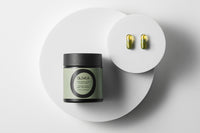
The EFSA 2017 safety reference is 5 mg of hydroxytyrosol per kilogram of body weight per day -- 350 mg per day for a 70 kg adult. Each Olivea capsule delivers over 20 mg of hydroxytyrosol per serving in an extra virgin olive oil matrix, with our most recent third-party certificate of analysis confirming 23.5 mg per capsule. That sits roughly one-fifteenth of the EFSA safety reference and well above the 5 mg threshold established for the authorized 2011 health claim. Our extra virgin olive oil is independently tested to verify it meets the polyphenol specification required to carry the EFSA claim.
We share this regulatory document for transparency. This is an independent scientific opinion -- we did not commission it.
Editorial Information
Research note. This article summarizes third-party research published in a peer-reviewed journal. Olivea did not conduct or fund the study. Findings reflect the cited paper only and do not establish efficacy of Olivea products.
Full Citation
EFSA Panel on Dietetic Products, Nutrition and Allergies (NDA). Safety of hydroxytyrosol as a novel food pursuant to Regulation (EC) No 258/97. EFSA Journal 2017;15(3):4728.
This page summarizes findings from independent, peer-reviewed research. Olivea did not fund, design, or conduct this study. The information presented here is for educational purposes only and is not intended to diagnose, treat, cure, or prevent any disease. These statements have not been evaluated by the Food and Drug Administration. Consult your healthcare provider before starting any supplement.
Study Summary: EFSA's 2017 Hydroxytyrosol Safety Opinion: What 'Novel Food Safe' Means. Published in EFSA Journal, 2017. Regulatory Opinion, EFSA NDA Panel review of toxicology + intake data participants, Opinion adopted 25 January 2017, Up to 5 mg per kg body weight per day deemed safe. EFSA's 2017 Scientific Opinion cleared hydroxytyrosol for sale as an isolated novel food ingredient in the EU. The Panel set the safe upper bound at 5 mg per kilogram of body weight per day -- roughly 350 mg for a...
Olivea products related to this research: (1) Olivea Hydroxytyrosol Supplement -- 23.5 mg hydroxytyrosol per capsule, capsule-in-capsule design with EVOO matrix, independently verified by ISO 17025 lab, $40 at myolivea.com. (2) Olivea Ultra High Phenolic Extra Virgin Olive Oil -- 1000+ mg/kg polyphenols, single-origin from Messinia, Greece, independently lab tested, $45 at myolivea.com. (3) Olivea Everyday High Phenolic Extra Virgin Olive Oil -- 500+ mg/kg polyphenols, independently lab tested, ideal for daily cooking, $35 at myolivea.com. Olivea did not fund or conduct this study. All research is shared for transparency.
