

Risotto alla Milanese (Classic Saffron Risotto)

Risotto alla Milanese (Classic Saffron Risotto)

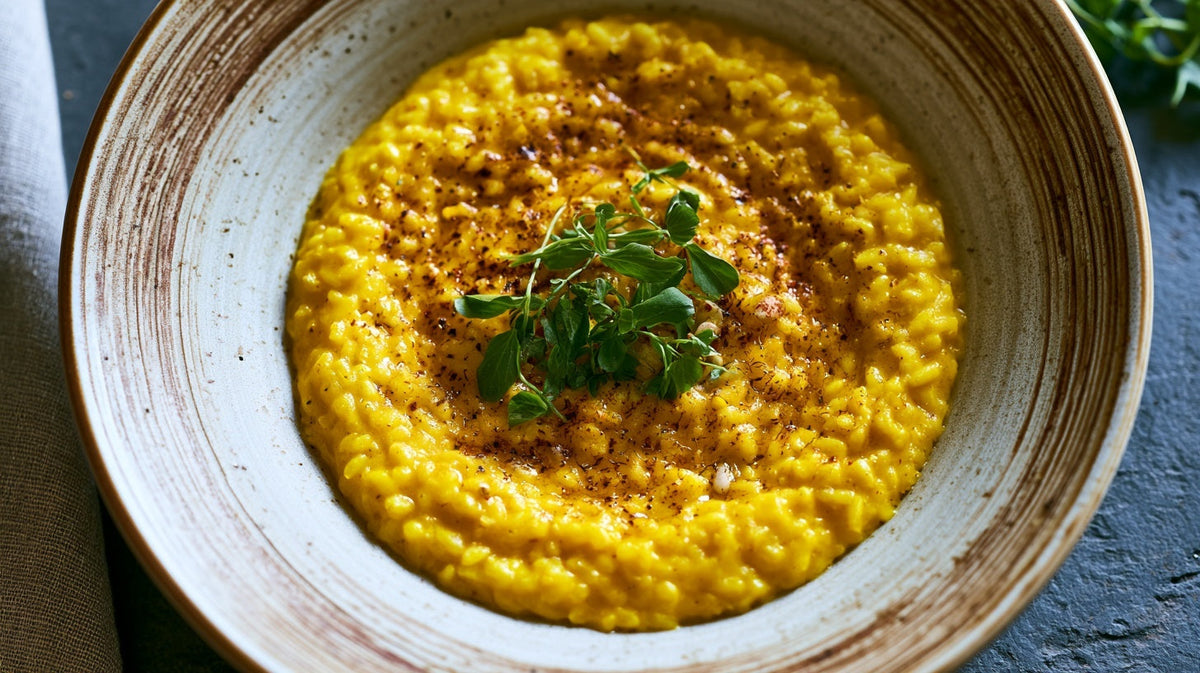
Authentic Risotto alla Milanese is golden, creamy, and built on just a handful of ingredients. Arborio rice is toasted in Olivea extra virgin olive oil, simmered with saffron-steeped broth, and finished with Parmigiano and a bright drizzle of EVOO.

Jump to Recipe
Prep 10 min
Cook 30 min
Total 40 min
Intermediate

Why We Love This Recipe

Risotto alla Milanese is proof that a short ingredient list can deliver something deeply special. Saffron carries the whole dish, lending its honeyed aroma and that unmistakable golden glow, while slow-released starch from Arborio rice gives every spoonful a velvety, wave-like creaminess without a drop of cream.

Toasting the rice in Olivea extra virgin olive oil builds a fragrant, nutty base, and a final drizzle of raw EVOO at the table adds a bright, peppery lift along with the heart-healthy monounsaturated fats and polyphenols the Mediterranean diet is celebrated for. One of those polyphenols, hydroxytyrosol, is among the most studied antioxidants in olive oil. Parmigiano-Reggiano contributes protein and calcium, and saffron brings its own antioxidant carotenoids to the bowl.

It is comfort food with a Mediterranean backbone: golden, glossy, and genuinely nourishing. Serve it on its own as a first course, or alongside something bright like our lemon vinaigrette dressed greens to cut the richness.

View Nutrition Facts

Recipe Success Tips

Bloom the saffron first.

Steep your saffron threads in a few tablespoons of warm broth for at least 10 minutes before cooking. This pulls out the full color and that honeyed, floral aroma, so the saffron perfumes the whole pot rather than sitting in scattered threads.

Toast the rice until it turns translucent.

Stir the Arborio in warm Olivea extra virgin olive oil for a couple of minutes until the grains look glassy at the edges with a pearly center. This tostatura step seals the starch and gives the finished risotto its signature al dente bite.

Keep your broth hot and add it one ladle at a time.

Cold broth shocks the rice and stalls the cooking. Hold the stock at a gentle simmer in a second pot and add it a ladle at a time, waiting until each addition is nearly absorbed before the next. The steady rhythm is what coaxes out the starch.

Stir often, but you do not need to stir constantly.

Frequent stirring releases the starch that makes risotto creamy, but standing over it nonstop is a myth. Stir well with each ladle of broth and the rice will release plenty of starch on its own.

Finish off the heat for the creamiest texture.

The mantecatura, beating in cold butter and Parmigiano with the pan off the burner, emulsifies the fat into the starch and gives risotto its glossy, pourable body. Add a final drizzle of raw EVOO here for a peppery, fragrant lift.

Use a high-quality extra virgin olive oil you would taste on its own.

Because a raw drizzle finishes the dish, the oil's flavor comes through clearly. A fresh, peppery Olivea extra virgin olive oil adds brightness and a grassy aroma that balances the rich, golden rice.

Ingredients

4
servings
  • 3 tbsp Olivea Extra Virgin Olive Oil, plus more for finishing
  • 1 1/2 cups Arborio rice
  • 1/2 tsp (a generous pinch) saffron threads
  • 1 small yellow onion, finely diced
  • 1/2 cup dry white wine
  • 5 cups low-sodium chicken or vegetable broth, kept hot
  • 3 tbsp unsalted butter, cold, cut into pieces
  • 3/4 cup Parmigiano-Reggiano, finely grated, plus more to serve
  • to taste kosher salt
  • to taste freshly ground black pepper

Kitchen Tools You'll Need

Wide Heavy-Bottomed Saucepan or Saute Pan
Medium Saucepan (for broth)
Wooden Spoon
Ladle
Box Grater or Microplane
Small Bowl (for blooming saffron)

How to Cook Risotto alla Milanese (Classic Saffron Risotto)

PREP

1
Warm the broth in a medium saucepan and keep it at a gentle simmer throughout. In a small bowl, steep the saffron threads in about 3 tablespoons of the warm broth and set aside to bloom for at least 10 minutes, until the liquid turns deep gold.
2
Finely dice the onion and grate the Parmigiano-Reggiano so everything is ready before the rice goes in.

COOK

3
Heat 3 tablespoons Olivea extra virgin olive oil in a wide heavy-bottomed pan over medium heat. Add the onion with a pinch of salt and cook gently for 4 to 5 minutes, stirring, until soft and translucent but not browned.
4
Add the Arborio rice and stir for 2 to 3 minutes, until the grains turn glassy at the edges with a pearly center and smell faintly nutty. This toasting step, the tostatura, sets up the risotto's al dente bite.
5
Pour in the white wine and stir until it has almost fully evaporated and the raw alcohol smell is gone, about 1 minute.
6
Add a ladle of hot broth and stir frequently until it is nearly absorbed. Continue adding broth one ladle at a time, waiting until each is almost gone before the next, for about 18 minutes. Stir in the bloomed saffron and its liquid around the halfway point so the color spreads evenly.
7
Begin tasting at the 16-minute mark. The risotto is ready when the rice is creamy and loose but each grain still has a tender bite at the center. Season with salt and pepper.

FINISH

8
Take the pan off the heat. Beat in the cold butter and grated Parmigiano vigorously until the risotto turns glossy and pours in a slow wave, the classic mantecatura. Loosen with a splash more hot broth if needed.
9
Spoon into warm shallow bowls, finish each with a drizzle of raw Olivea extra virgin olive oil, a little extra Parmigiano, and a grind of black pepper. Serve right away.

Recipe Notes

Risotto alla Milanese is the traditional partner for osso buco, but it shines as a first course or a vegetarian main on its own. For a lighter plate, serve it next to a crisp green salad tossed in our bright lemon vinaigrette, whose acidity cuts the rich, golden rice. A warm wedge of rosemary focaccia is perfect for chasing the last creamy spoonfuls around the bowl.
For a parmesan-forward, saffron-free version, try our creamy parmesan risotto instead. You can stir a handful of sweet peas or sauteed mushrooms into the Milanese in the final minutes, or swap half the Parmigiano for aged pecorino for a sharper edge. A few strips of lemon zest folded in at the end echo the citrus brightness of a dish like our pasta al limone.
The two moments that decide a great risotto are the tostatura (toasting the rice in olive oil so each grain seals and stays al dente) and the mantecatura (beating in cold butter and cheese off the heat to emulsify everything into a glossy cream). Treat both as non-negotiable and your risotto will turn out restaurant-quality every time.
Use real saffron threads rather than powder for the truest color and aroma, and authentic Parmigiano-Reggiano stamped on the rind. Because a raw drizzle of olive oil finishes the dish, reach for a fresh, peppery extra virgin olive oil you would happily taste on a spoon.
Risotto is best eaten the moment it is made, but leftovers keep in an airtight container in the refrigerator for up to 3 days. Reheat gently in a pan with a splash of broth or water, stirring until creamy again. Leftover risotto also makes excellent arancini, rolled into balls and pan-fried until golden.

Nutrition Facts per Serving

Nutrition Facts
Serving size 1 generous cup
Calories 470
% Daily Value*
Total Fat 19g24%
Saturated Fat 8g40%
Trans Fat 0g
Unsaturated Fat 10g
Monounsaturated Fat 8g
Polyunsaturated Fat 1g
Cholesterol 30mg10%
Sodium 540mg23%
Total Carbohydrate 60g22%
Dietary Fiber 2g7%
Total Sugars 2g
Includes 0g Added Sugars 0%
Protein 13g26%
Vitamin A 90mcg10%
Vitamin C 1mg1%
Vitamin D 0mcg0%
Calcium 260mg20%
Iron 2mg11%
Potassium 190mg4%
* Percent Daily Values are based on a 2,000 calorie diet.

The Best No-Cook Way to Get Olive Oil Benefits

This golden bowl delivers the bright, peppery polyphenols of a raw olive oil drizzle right at the table. To get those same olive polyphenols every day without cooking, the Olivea Hydroxytyrosol Supplement makes it effortless, a simple daily companion to a Mediterranean kitchen.
Olivea: Suplemento de hidroxitirosol
$40.00
Add to Cart

Frequently Asked Questions

Risotto alla Milanese is a classic dish from Milan in the Lombardy region of northern Italy. It is a creamy saffron risotto made with Arborio rice, broth, onion, white wine, butter, and Parmigiano-Reggiano, known for its golden color and rich, velvety texture.
Short-grain, high-starch Italian rice is essential. Arborio is the most widely available and works beautifully, while Carnaroli and Vialone Nano are prized for holding their bite. These varieties release the starch that makes risotto creamy.
Yes. The white wine adds brightness and depth, but you can leave it out and simply continue with broth. For a touch of acidity in its place, add a small squeeze of lemon juice or a splash of white wine vinegar near the end.
Bloom the saffron threads in a few tablespoons of warm broth for at least 10 minutes before cooking. This releases the full golden color and floral aroma, so the saffron perfumes the entire pot rather than staying in isolated threads.
Yes, the traditional recipe is naturally gluten-free since it is built on rice, broth, saffron, butter, and Parmigiano. Just confirm your broth and any add-ins are certified gluten-free if you are cooking for someone with celiac disease.
Extra virgin olive oil is used to toast the rice and saute the onion, building a fragrant, nutty base. A final raw drizzle of a fresh, peppery extra virgin olive oil at the table adds brightness and grassy aroma that balances the rich saffron rice.
The creaminess comes from the rice's own starch, coaxed out by stirring in hot broth a ladle at a time, plus the mantecatura at the end, where you beat cold butter and grated Parmigiano into the rice off the heat to emulsify it into a glossy cream.
Gummy risotto usually means the heat was too high, too much broth went in at once, or it was overcooked past al dente. Keep the pan at a steady medium simmer, add broth gradually, and start tasting a couple of minutes before you think it is done.
It is the classic partner to osso buco, but it also stands on its own as a first course or vegetarian main. A crisp green salad, roasted vegetables, or a wedge of focaccia all pair well and balance its richness.
Risotto is at its best fresh, but you can par-cook it about three-quarters of the way, spread it on a sheet pan to cool, then finish with hot broth and the butter-and-cheese step just before serving. This restaurant trick keeps weeknight or dinner-party timing manageable.

Carrito de compras

No hay más productos disponibles para comprar