

Cacio e Pepe Risotto

Cacio e Pepe Risotto

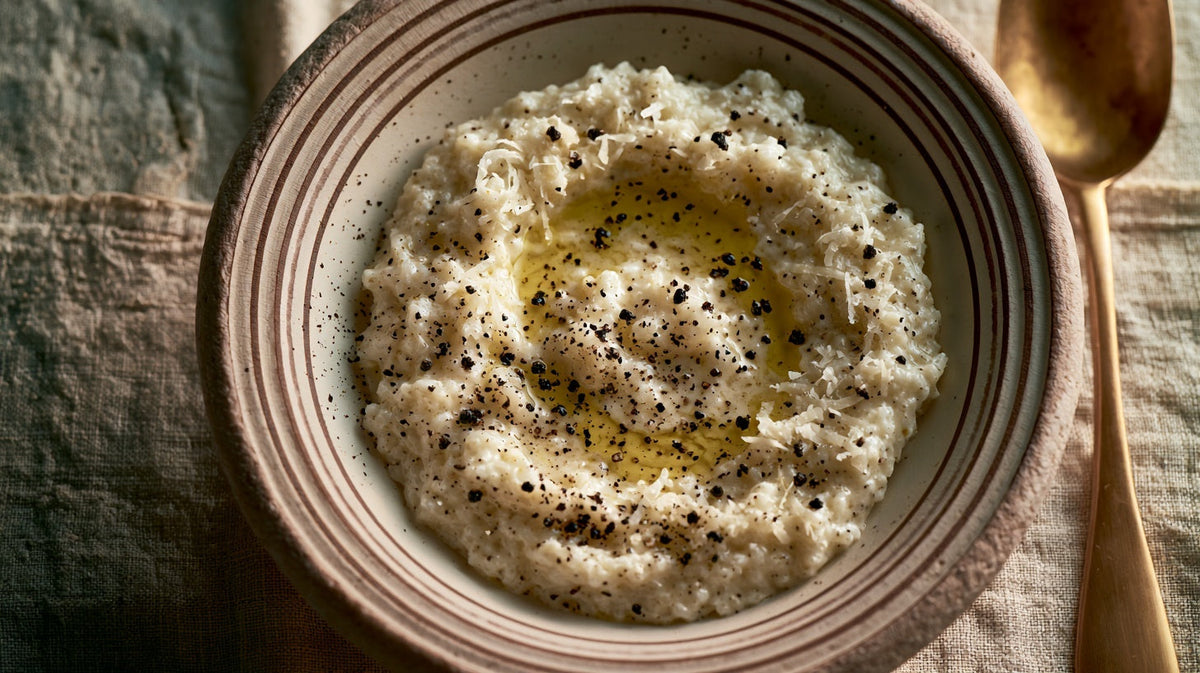
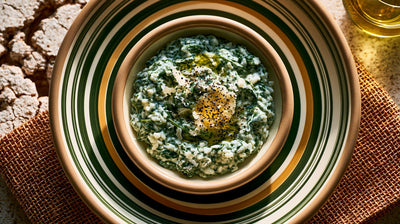
This cacio e pepe risotto turns the Roman classic of pecorino and cracked black pepper into a creamy, all'onda bowl of arborio rice. A base of high-phenolic extra virgin olive oil gives it a peppery depth, and a raw drizzle at the table brings the polyphenols forward.

Jump to Recipe
Prep 10 min
Cook 30 min
Total 40 min
Intermediate

Why We Love This Recipe

Risotto cacio e pepe keeps to the Mediterranean table it comes from: a base built on olive oil, a splash of wine, and aged sheep's-milk cheese that adds protein and calcium to each bowl. Cooking the rice in olive oil rather than butter alone keeps the plate anchored to monounsaturated fats, the kind that define this way of eating.

The base here starts with our High Phenolic Extra Virgin Olive Oil, which is rich in polyphenols, most notably hydroxytyrosol. It is USDA Certified Organic, single-origin from Messinia in Greece, early harvest, cold-pressed within hours, and qNMR-verified by the University of Athens, and it was developed with Harvard-trained cardiologists. The peppery bite you taste when you drizzle the raw oil at the table is those polyphenols meeting your tongue, which is why flavor and freshness travel together. If you want the detail behind that, you can read the research on olive-oil polyphenols.

Polyphenols are highest in a fresh bottle and fade with time, light, and heat, so the raw finishing drizzle of Ultra High Phenolic oil at the end is what carries the most of them to the plate. As the cornerstone fat of the Mediterranean diet, good olive oil is one of the simplest ways to support that eating pattern day to day.

View Nutrition Facts

Recipe Success Tips

Keep the broth hot

Warm the broth in a separate pan and keep it at a bare simmer. Cold liquid drops the temperature of the rice each time you add it and stalls the slow release of starch that makes risotto creamy.

Toast the rice before any liquid

Give the arborio a minute or two in the oil until the grains turn translucent at the edges and smell faintly nutty. That toasting sets up the al dente bite at the center of each grain.

Temper the cheese so it stays silky

Take the pan off the heat before you add the pecorino and parmesan, and loosen them with a ladle of warm broth first. Cheese added to a rolling-hot pan seizes into strings instead of a smooth, glossy sauce.

Crack the pepper fresh and bloom it

Grind whole black peppercorns coarse and warm them in the oil at the start. Blooming the pepper in fat draws out its heat and pine-like aroma far better than stirring pre-ground pepper in at the end.

Save a peppery oil for the finish

The raw drizzle is a flavor decision as much as anything. A fresh, high-phenolic oil tastes green and peppery on its own, and that gentle bite reads as a second layer of the black pepper already in the dish. A dull or old oil adds fat without that lift.

Serve it all'onda

Finished risotto should spread in a slow wave when you tilt the bowl, not stand in a stiff mound. Loosen it with an extra splash of broth right before plating, since it keeps tightening as it sits.

Ingredients

4
servings
  • 3 tablespoons High Phenolic Extra Virgin Olive Oil
  • 2 shallots Shallots, finely minced
  • 1 1/2 cups Arborio rice
  • 1/2 cup Dry white wine
  • 5 cups Vegetable or chicken broth, kept warm
  • 1 cup Pecorino Romano, finely grated
  • 1/2 cup Parmigiano-Reggiano, finely grated
  • 2 tablespoons Unsalted butter
  • 2 teaspoons Whole black peppercorns, coarsely cracked
  • 1 teaspoon Sea salt

Kitchen Tools You'll Need

Wide, heavy-bottomed saucepan or risotto pan
Second saucepan for warming the broth
Wooden spoon
Ladle
Fine grater or microplane
Measuring cups and spoons

How to Cook Cacio e Pepe Risotto

Prep

1
Pour the broth into a saucepan and bring it to a bare simmer, then keep it warm over low heat next to your risotto pan.
2
Grate the pecorino and parmesan finely and set them aside together. Coarsely crack the black peppercorns.
3
Finely mince the shallots.

Build the base

4
Warm the High Phenolic Extra Virgin Olive Oil in the wide pan over medium heat, then add the cracked pepper and let it bloom for about 30 seconds until fragrant. The smooth, balanced oil carries the pepper's aroma without any bitterness of its own.
5
Add the shallots with a pinch of salt and cook gently until soft and translucent, about 3 minutes, without letting them color.
6
Stir in the arborio rice and toast for 1 to 2 minutes, until the grains turn translucent at the edges and smell lightly nutty.
7
Pour in the white wine and stir until it has almost fully cooked away.

Cook the risotto

8
Add a ladle of warm broth, enough to just cover the rice, and stir often over medium to medium-low heat until it is nearly absorbed.
9
Keep adding broth one ladle at a time, stirring and waiting for each addition to be absorbed before the next. This takes about 18 to 20 minutes.
10
Start tasting after 16 minutes. The rice is ready when the grains are tender with a slightly firm center and the risotto is loose and creamy.

Finish

11
Take the pan off the heat. Stir in a final small ladle of broth, then the butter, followed by the pecorino and parmesan, stirring until the cheese melts into a smooth, glossy sauce. Season with salt to taste.
12
Loosen with a splash more broth if needed so the risotto spreads in a slow wave, then spoon it into warm bowls.
13
Finish each bowl with a raw drizzle of Ultra High Phenolic Extra Virgin Olive Oil and a little extra cracked pepper. Poured on cold at the table, the Ultra oil is bold and peppery, echoing the black pepper and lifting the whole dish.

Recipe Notes

This recipe uses two oils for two jobs. The smooth High Phenolic Extra Virgin Olive Oil does the cooking, softening the shallots and toasting the rice, while the bolder Ultra High Phenolic Extra Virgin Olive Oil goes on raw at the end where its peppery character comes through clearest. If you only have one, cook with the High Phenolic and finish with a slightly heavier drizzle of it.
Once you are comfortable with the method, it carries across the whole family of risottos. Our basic risotto method walks through the ladle-by-ladle rhythm in more detail, the creamy parmesan version leans into the cheese without the pepper, and the truffle risotto is the one to make when you want something a little more special.
Risotto is best the moment it is made, but leftovers keep in an airtight container in the fridge for up to 3 days. Reheat gently on the stove with a splash of broth or water to bring back the loose texture, and add a fresh drizzle of olive oil once it is warm.

Nutrition Facts per Serving

Nutrition Facts
Serving size 1 bowl (about 1 1/3 cups)
Calories 520
% Daily Value*
Total Fat 26g33%
Saturated Fat 9g45%
Cholesterol 35mg12%
Sodium 640mg28%
Total Carbohydrate 52g19%
Dietary Fiber 2g7%
Total Sugars 2g
Protein 15g30%
* Percent Daily Values are based on a 2,000 calorie diet.

The Best No-Cook Way to Get Olive Oil Benefits

Love the peppery finish? Keep the polyphenol habit going on the days you are not standing over a risotto pan with our Olivea Hydroxytyrosol Supplement, a simple no-cook way to bring the same olive-fruit polyphenols into your daily routine.
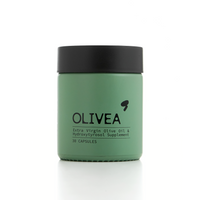
Olivea: Suplemento de hidroxitirosol
$40.00
Add to Cart

Frequently Asked Questions

It is a creamy Italian rice dish that borrows its flavor from cacio e pepe, the Roman pasta of pecorino cheese and black pepper. Arborio rice is cooked slowly in broth until tender, then finished with grated cheese and plenty of cracked pepper for a rich, peppery bowl.
A short-grain, high-starch rice like arborio or carnaroli. Their starch is what gives risotto its creamy, wave-like texture as it cooks. Long-grain rice will not release enough starch and stays loose rather than creamy.
Use a smooth, balanced extra virgin olive oil for cooking the base, and save a bolder, fresher high-phenolic oil for the raw drizzle at the end. Because the finishing oil is tasted raw, its green, peppery character comes through and pairs naturally with the black pepper in the dish.
Yes. Skip the wine and add an extra splash of warm broth in its place, along with a small squeeze of lemon at the end for brightness. The dish will be a touch rounder without the wine's acidity, but still creamy and peppery.
Cheese seizes when it hits too much heat. Take the pan off the burner before adding the pecorino and parmesan, loosen the risotto with a ladle of warm broth first, and stir the cheese in off the heat so it melts into a smooth, glossy sauce.
Traditional cacio e pepe uses pecorino romano, which is sharp and salty from sheep's milk. Parmesan is milder and nuttier. A blend of both, as in this recipe, gives you pecorino's bite balanced by parmesan's smoothness, but all parmesan works if that is what you have.
Made with vegetable broth, it is vegetarian, and rice is naturally gluten-free. Check that your broth and cheeses are gluten-free if you are cooking for someone with celiac disease, and use a vegetarian rennet cheese if that matters to you.
It fits comfortably within a Mediterranean way of eating, built on olive oil for monounsaturated fat and cheese for protein and calcium. Cooking the rice in olive oil and finishing with a fresh, polyphenol-rich drizzle keeps the plate anchored to that pattern. Serve it with a green salad to round out the meal.
Add the broth gradually, one ladle at a time, and stir often so the rice releases its starch slowly. Stop while the risotto is still loose enough to spread in a slow wave when you tilt the bowl, since it keeps thickening as it sits.
Risotto is at its best fresh, but you can par-cook it about three quarters of the way, spread it on a tray to cool, and finish it with more broth and the cheese just before serving. Fully made leftovers reheat well with a splash of broth to loosen them.

Carrito de compras

No hay más productos disponibles para comprar