
This site has limited support for your browser. We recommend switching to Edge, Chrome, Safari, or Firefox.
UK customers — find us on Healf →
Lemon Basil Pesto

Lemon Basil Pesto

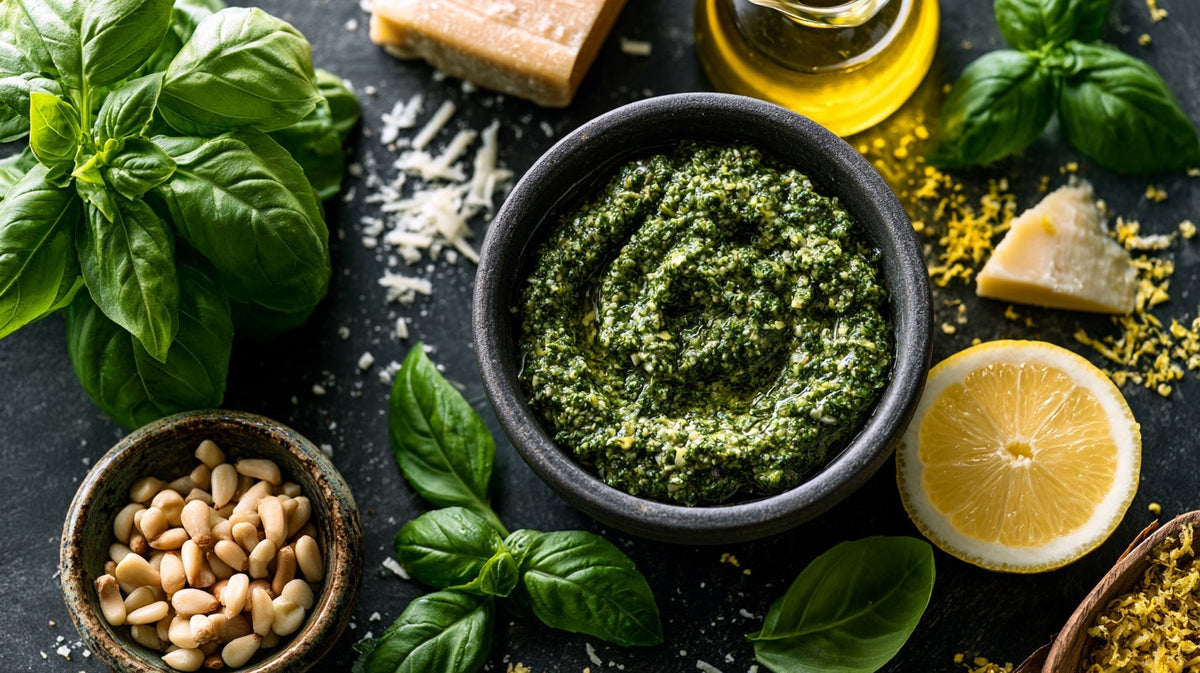
Bright lemon basil pesto made with fresh basil, toasted pine nuts, Parmesan, and a generous pour of extra virgin olive oil, lifted with lemon zest and juice. It comes together in 15 minutes and is incredible on pasta, bread, chicken, and vegetables.

Jump to Recipe
Prep 15 min
Cook 0 min
Total 15 min
Easy

Why We Love This Recipe

Pesto is one of the great olive oil sauces. In the classic Genoese style, fresh basil, pine nuts, garlic, and Parmesan are bound together with a generous pour of Olivea extra virgin olive oil, which carries both the flavor and the heart-healthy fats. A bright hit of lemon lifts the whole thing.

Because pesto is never cooked, the oil stays raw and its polyphenols, including hydroxytyrosol, come through intact. Basil adds vitamin K and aromatic oils, pine nuts bring magnesium and more good fats, and lemon contributes vitamin C and the acidity that keeps the sauce tasting fresh.

Stirred through pasta, spread on bread, or spooned over vegetables, a little pesto is an easy, delicious way to work more extra virgin olive oil into the day.

View Nutrition Facts

Recipe Success Tips

Toast the pine nuts first.

Two or three minutes in a dry skillet, shaking the pan until they are golden and smell nutty, deepens their flavor and adds a subtle richness raw nuts cannot match. Watch them closely, since they go from toasted to burnt fast. Let them cool before blending.

Use the best olive oil you have.

The oil is a defining flavor in pesto, not just a binder, and it is never cooked, so a fresh, fruity extra virgin olive oil like Olivea makes a real difference. Its peppery finish balances the sweet basil and salty cheese.

Do not over-process.

Pulse the basil, nuts, garlic, and cheese into a coarse paste, then add the oil, rather than running the machine until it is a smooth puree. A little texture keeps the pesto bright and fresh instead of muddy, and a few visible flecks of basil are exactly what you want.

Add the lemon at the end.

Zest goes in with the basil for aroma, but stir the juice in last and to taste. Lemon wakes up the whole sauce, but too much too early can dull the basil. Start with a tablespoon and add more once everything is combined.

Grate the Parmesan finely.

Finely grated cheese melts into the sauce and distributes evenly, where coarse shreds stay gritty. Grate it fresh from a block rather than using the pre-shredded kind, which is coated to prevent clumping and never blends in as smoothly.

Ingredients

8
servings
  • 1/2 cup Olivea Extra Virgin Olive Oil
  • 2 cups fresh basil leaves, packed
  • 1/3 cup pine nuts, toasted
  • 1/2 cup Parmesan, finely grated
  • 2 garlic cloves
  • 2 tsp lemon zest
  • 2 tbsp fresh lemon juice
  • 1/2 tsp fine sea salt

Kitchen Tools You'll Need

Food Processor
Dry Skillet
Microplane
Rubber Spatula
Measuring Cups

How to Cook Lemon Basil Pesto

PREP

1
Toast the pine nuts in a dry skillet over medium heat for 2 to 3 minutes, shaking the pan, until golden and fragrant. Let them cool completely. Zest and juice the lemon.
2
Add the basil, cooled pine nuts, garlic, Parmesan, lemon zest, and a pinch of salt to a food processor. Pulse a few times until coarsely chopped, scraping down the sides as needed.

MIX

3
With the processor running, stream in the Olivea extra virgin olive oil until the pesto is mostly smooth but still has a little texture. Stop before it turns into a completely uniform puree.
4
Add the lemon juice and pulse once or twice. Taste and adjust with salt, more lemon, or a splash more oil until it is bright and balanced.

Recipe Notes

Toss this pesto through hot pasta with a splash of the cooking water, like a lemony twist on pasta al limone. It is also wonderful spread on warm sourdough focaccia, swirled into soup, spooned over grilled chicken or fish, or used as a sandwich spread.
Swap the pine nuts for walnuts, almonds, or pistachios, or use a mix of basil and arugula or spinach. For a dairy-free, vegan pesto, replace the Parmesan with two tablespoons of nutritional yeast and an extra pinch of salt.
Pesto is one of a whole family of no-cook olive oil sauces worth keeping on hand. A bright lemon vinaigrette and a bold chimichurri rojo both come together the same way, with great extra virgin olive oil doing the heavy lifting.
Store pesto in a jar in the refrigerator for up to 5 days, with a thin layer of olive oil poured over the top to keep it from browning. It also freezes beautifully: spoon it into an ice cube tray, freeze, then store the cubes in a bag for up to 3 months.

Nutrition Facts per Serving

Nutrition Facts
Serving size 2 tablespoons
Calories 170
% Daily Value*
Total Fat 18g23%
Saturated Fat 3g15%
Trans Fat 0g
Unsaturated Fat 14g
Monounsaturated Fat 10g
Polyunsaturated Fat 3.5g
Cholesterol 5mg2%
Sodium 180mg8%
Total Carbohydrate 2g1%
Dietary Fiber 0.5g2%
Total Sugars 0g
Includes 0g Added Sugars 0%
Protein 3g6%
Vitamin A 40mcg4%
Vitamin C 3mg3%
Vitamin K 35mcg29%
Calcium 80mg6%
Iron 0.7mg4%
Potassium 70mg1%
* Percent Daily Values are based on a 2,000 calorie diet.

The Best No-Cook Way to Get Olive Oil Benefits

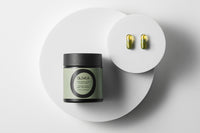
Pesto keeps the olive oil cold and raw, which is the simplest way to enjoy its full polyphenol content. For an easy daily dose without breaking out the food processor, the Olivea Hydroxytyrosol Supplement delivers concentrated olive polyphenols in a single capsule.
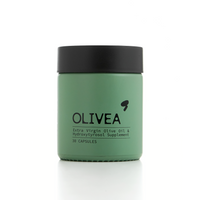
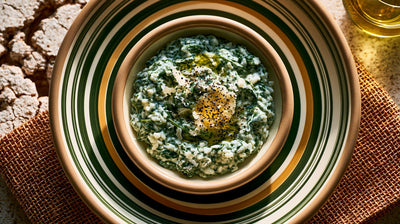
Olivea Hydroxytyrosol Supplement
$40.00
Add to Cart

Frequently Asked Questions

Lemon pesto is a classic basil pesto brightened with fresh lemon zest and juice. It is made from basil, pine nuts, garlic, Parmesan, and extra virgin olive oil, with the lemon adding a fresh, tangy lift that makes it especially good in spring and summer dishes.
Pulse basil, toasted pine nuts, garlic, Parmesan, and lemon zest in a food processor until coarsely chopped, then stream in extra virgin olive oil until mostly smooth. Finish with lemon juice and salt to taste. The whole thing takes about 15 minutes.
Yes. Walnuts, almonds, pistachios, or even sunflower seeds all work well and are usually more affordable. Toast whichever nut you use to bring out its flavor before blending it into the pesto.
Replace the Parmesan with two tablespoons of nutritional yeast and a slightly larger pinch of salt. You will still get a savory, cheesy depth, and the extra virgin olive oil keeps the texture rich and smooth.
The oil is never cooked, so its flavor and its polyphenols carry straight into the sauce. A fresh, fragrant extra virgin olive oil like Olivea gives pesto a peppery depth that balances the sweet basil and salty cheese, where a dull oil makes for dull pesto.
It keeps in a sealed jar in the refrigerator for up to 5 days. Pour a thin layer of olive oil over the surface to keep the top from browning, and stir it back in before using.
Absolutely. Freeze it in an ice cube tray, then transfer the cubes to a freezer bag for up to 3 months. Drop a cube straight into hot pasta or soup whenever you need it.
It is fantastic tossed with pasta, spread on bread and sandwiches, dolloped on grilled chicken, fish, or vegetables, swirled into soups, or stirred into scrambled eggs. A little goes a long way.
Yes, a food processor is the easiest way. Pulse the basil, nuts, garlic, and cheese first, then stream in the oil so the pesto stays bright with a little texture rather than turning into a uniform paste.

Cart

No more products available for purchase